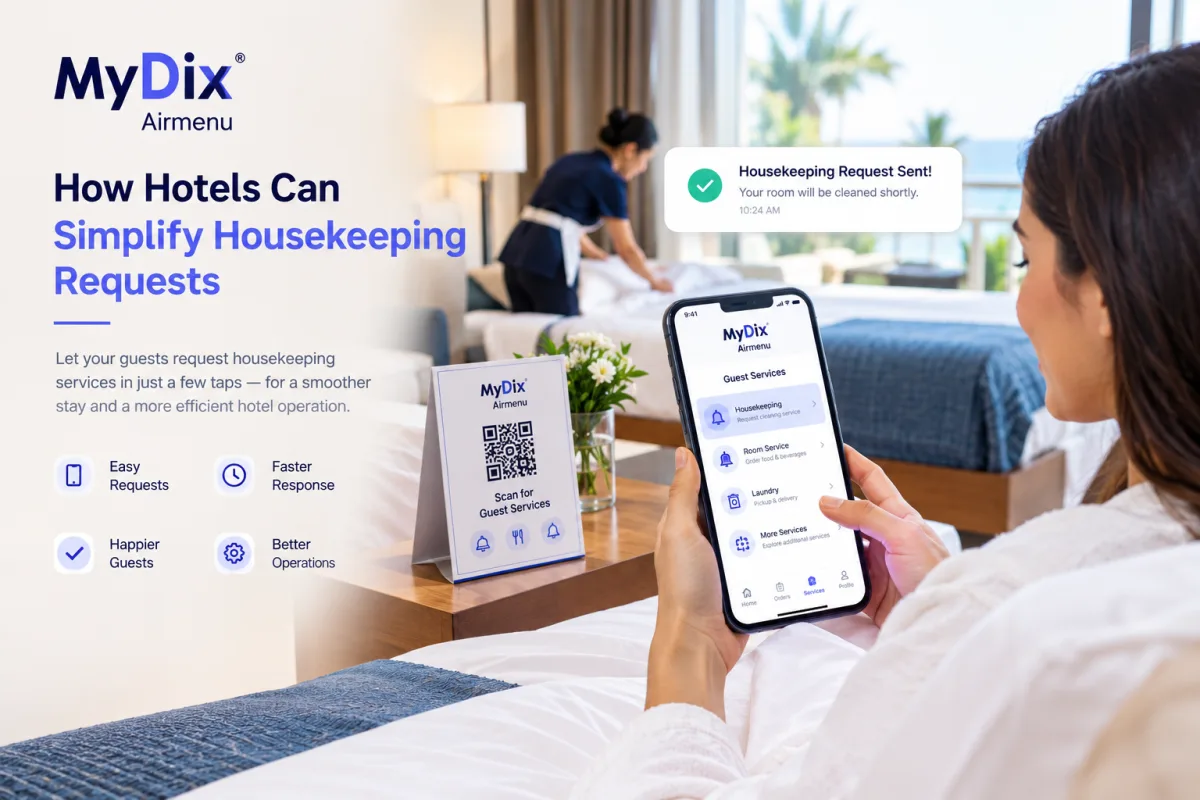
Housekeeping runs on dozens of small requests a day — fresh towels, a missing pillow, a room that needs servicing earlier than usual. Handled by phone and relayed by hand, each one depends on someone remembering to pass it along correctly. Handled digitally, the request carries its own details from the moment it is raised.
The request already knows where it belongs
Because a housekeeping request comes in through the same QR code the guest scanned in their room, it arrives with the room number attached automatically — no transcription, no "which room did you say?". It is then routed by type to the team responsible, the same way a food order reaches the kitchen rather than the front desk.
Coordination that staff can actually see
- Requests tracked through to completion, like an order moving through its stages
- Nothing depends on a note being passed between shifts
- Staff accounts scoped to the outlets and locations they actually work in
- Managers get a record of what was requested, from where, and how long it took
That staff-side structure is covered in more depth on the staff management and RBAC page — each role sees only the part of the system its job requires, so a housekeeping request reaches housekeeping, not an inbox everyone has to filter through.
Fewer delays, fewer repeated calls
The practical outcome is fewer requests that stall because a detail was lost in translation, and a guest who is not calling a second time to ask what happened to the first call. For a property weighing this against its current process, the pricing page sets out what is included from day one, or you can book a free demo and bring your own housekeeping workflow to the conversation.
See MYDIX on your own menu.
A short demo is the fastest way to tell whether it fits.