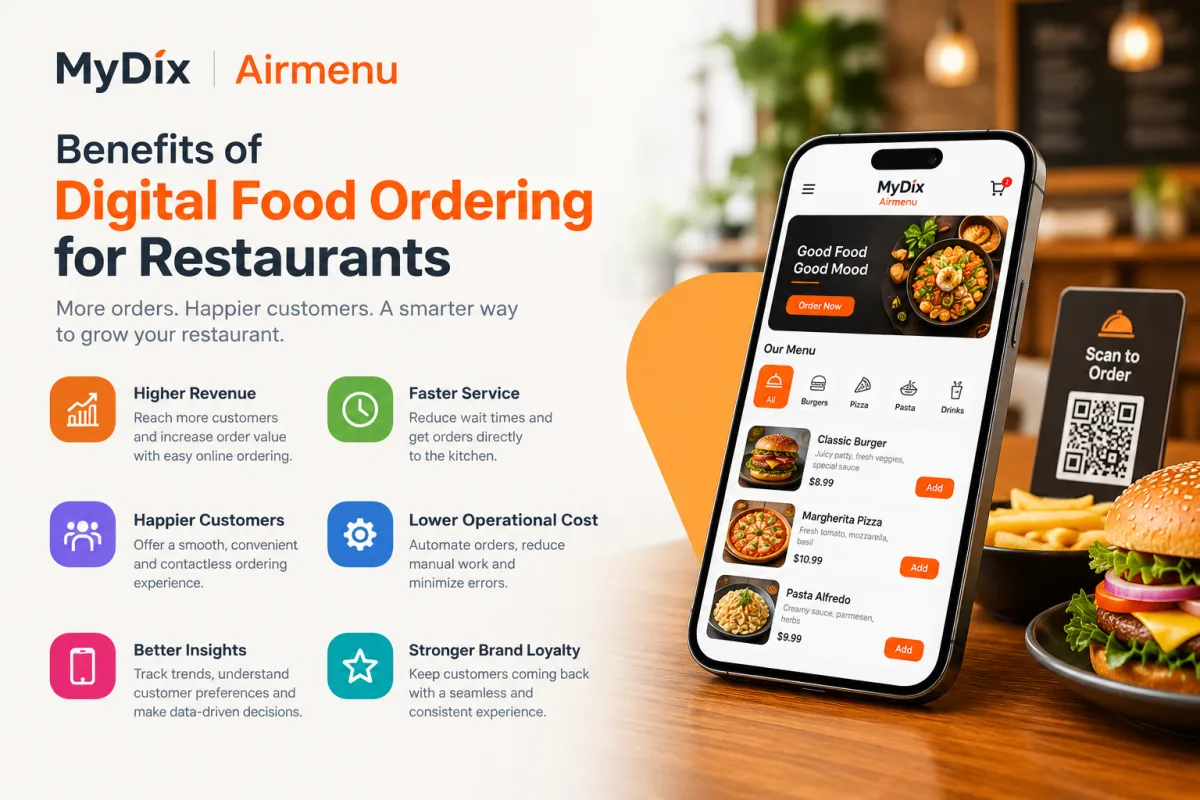
Two problems recur in most restaurants regardless of size: the menu is harder to change than it should be, and orders taken by hand leave room for mistakes between the table and the kitchen. Digital ordering addresses both at once.
A menu that keeps up with the kitchen
Swap a dish, flip a daypart, or mark something sold out, and the change is live on every table immediately — nobody is still handing out a printed card listing a dish the kitchen ran out of an hour ago. The same QR code serves every table because the code itself carries the location, so there is no need for a guest to select which table they are sitting at.
Orders that arrive ready to cook from
- Orders arrive itemised, with kitchen notes and dietary markers attached
- A live queue the kitchen can work through in sequence, instead of shouted tickets
- Status moves from accepted to preparing, ready and served — visible to guest and staff alike
- Checkout runs through the restaurant's own Razorpay account when payment is enabled
The kitchen dashboard is where that queue lives for staff, and the Razorpay integration covers how payment settles directly into the restaurant's own account, with the bill itemised before the guest confirms.

Less manual order-taking, more consistent service
None of this removes the staff a restaurant already relies on — it removes the retyping, the mishearing and the walk back to the kitchen to double-check an order. For a restaurant deciding between the Standard and Payment Enabled plans, the pricing page lays out exactly what each includes, with no per-order commission either way.
See MYDIX on your own menu.
A short demo is the fastest way to tell whether it fits.